EN
EN


Selecting the right high voltage cable is one of the most consequential decisions in any electrical installation, whether you are designing an EV charging infrastructure, an industrial power distribution network, or a renewable energy system. The wrong choice can lead to costly failures, safety hazards, regulatory non-compliance, and significant downtime. Because the performance of a high voltage cable is determined by a combination of conductor material, insulation type, voltage rating, thermal resistance, and environmental suitability, the selection process demands a structured, application-specific approach rather than a simple price-based decision.
The market today offers a wide range of high voltage cable configurations tailored for different industries, voltage classes, and operating conditions. From XLPE-insulated cables used in electric vehicles to oil-resistant armored cables deployed in heavy industry, each cable type carries a distinct design rationale. Understanding what differentiates one high voltage cable type from another — and matching those differences to your specific application — is the foundation of a sound selection process. This article walks you through the key criteria, technical considerations, and decision logic that engineering and procurement professionals need to make the right call.
Understanding Voltage Class and System Requirements
Matching the Cable Voltage Rating to Your System
Every high voltage cable is manufactured and tested to a specific voltage class, which defines its safe operating range. Common voltage classes include 1 kV, 3.6/6 kV, 6/10 kV, 12/20 kV, and higher, depending on the application. Choosing a cable with a voltage rating that is lower than the system's actual operating voltage is a critical safety failure. Conversely, over-specifying the voltage class adds unnecessary cost and weight without performance benefit.
For electric vehicles and EV charging systems, the relevant high voltage cable standard often involves DC voltages in the 400 V to 1500 V range. A cable rated at 1500 V DC, such as those used in modern EV powertrains and charging architectures, is specifically engineered to handle the electrical stress of high-frequency switching and DC current flow. These requirements differ fundamentally from AC grid cables, which means the voltage class alone is not sufficient — the current type (AC or DC) must also be factored in.
Always verify the system's nominal voltage, peak transient voltage, and whether the application involves AC or DC power before specifying your high voltage cable. Engineers should also account for potential voltage surges during switching events, as these can momentarily exceed nominal values and place stress on the insulation layer.
Evaluating the Conductor Cross-Section
The conductor cross-section of a high voltage cable, expressed in mm², determines its current-carrying capacity and resistive losses. A cable with an undersized conductor will overheat under load, degrade insulation over time, and potentially cause a fire. An oversized conductor is heavier, more expensive, and harder to install without adding meaningful performance benefits beyond a certain threshold.
Cross-sections commonly used in industrial and EV applications range from 16 mm² for lighter auxiliary circuits to 95 mm² or above for main power trunks. For example, a 70 mm² high voltage cable rated at 1500 V is widely used in EV traction systems because it balances current capacity with physical flexibility, making it suitable for routing through the constrained spaces of a vehicle chassis. The selection of cross-section must always be validated against the expected continuous current, short-circuit current, and installation conditions such as ambient temperature and grouping factors.
Insulation and Jacket Material Selection
Why XLPE Insulation Dominates Modern High Voltage Applications
Insulation material is arguably the most critical factor when specifying a high voltage cable. Cross-linked polyethylene, known as XLPE, has become the industry standard for medium and high voltage cables due to its superior dielectric strength, thermal stability, and resistance to moisture ingress. Unlike traditional PVC insulation, XLPE maintains its mechanical properties across a much wider temperature range, typically from -40°C to 90°C for continuous operation and up to 250°C under short-circuit conditions.
The cross-linking process creates a three-dimensional molecular network within the polyethylene structure that resists deformation under thermal stress. This is especially important for a high voltage cable installed in high-temperature environments such as engine compartments, industrial furnaces, or outdoor solar installations exposed to direct sunlight. XLPE also resists electrical treeing more effectively than PVC, which extends cable service life significantly in high-stress applications.
For EV and new energy vehicle applications, XLPE-insulated high voltage cable designs are the preferred choice because they combine light weight with high thermal performance and long-term dielectric reliability. These properties reduce the total weight of the cable harness, which directly contributes to vehicle energy efficiency — a critical design parameter in battery electric vehicles.
Outer Jacket and Environmental Protection
The outer jacket of a high voltage cable is the first line of defense against mechanical damage, chemical exposure, UV radiation, and moisture. Jacket materials include TPU (thermoplastic polyurethane), LSZH (low-smoke zero halogen), PVC, and rubber compounds, each suited to different environmental profiles. TPU jackets are favored in dynamic applications where the cable must flex repeatedly, such as in robotic systems or EV charging cables that undergo thousands of bending cycles.
LSZH jackets are specified in confined or public-facing installations — such as rail transit systems, tunnels, and building interiors — where toxic smoke in the event of a fire would pose an unacceptable risk to occupants. A high voltage cable with an LSZH outer jacket emits minimal smoke and no halogenic gases when exposed to flame, which is a regulatory requirement in many jurisdictions for public infrastructure projects.
When choosing the jacket material for your high voltage cable, assess the installation environment comprehensively. Factors to evaluate include exposure to oils and lubricants, presence of UV radiation, mechanical abrasion risk, temperature extremes, and whether the cable will be installed in open air, conduit, buried underground, or inside a sealed enclosure.
Flexibility, Bending Radius, and Installation Constraints
Static Versus Dynamic Cable Applications
Not all high voltage cable installations are the same. A cable running in a fixed underground duct experiences very different mechanical demands than one routed through the articulated joints of a mining vehicle or an EV charging arm that moves continuously during operation. The distinction between static and dynamic applications has a direct impact on which cable construction is appropriate.
Static installations allow the use of rigid conductors with fewer strands, which reduces manufacturing cost. Dynamic applications require finely stranded or rope-lay conductors that can flex thousands of times without internal fatigue fractures. The wrong choice — using a static-rated high voltage cable in a dynamic application — will result in conductor strand breakage, increased resistance, and eventual failure that may not be immediately visible from the outside of the cable.
In electric vehicle designs, the high voltage cable harness must accommodate the limited space available within a vehicle body and allow for service access without sharp bends that could stress the insulation. Specifying the minimum bending radius and ensuring the cable's construction allows that radius without conductor or insulation damage is a non-negotiable step in the design process.
Shielding Requirements and EMC Compliance
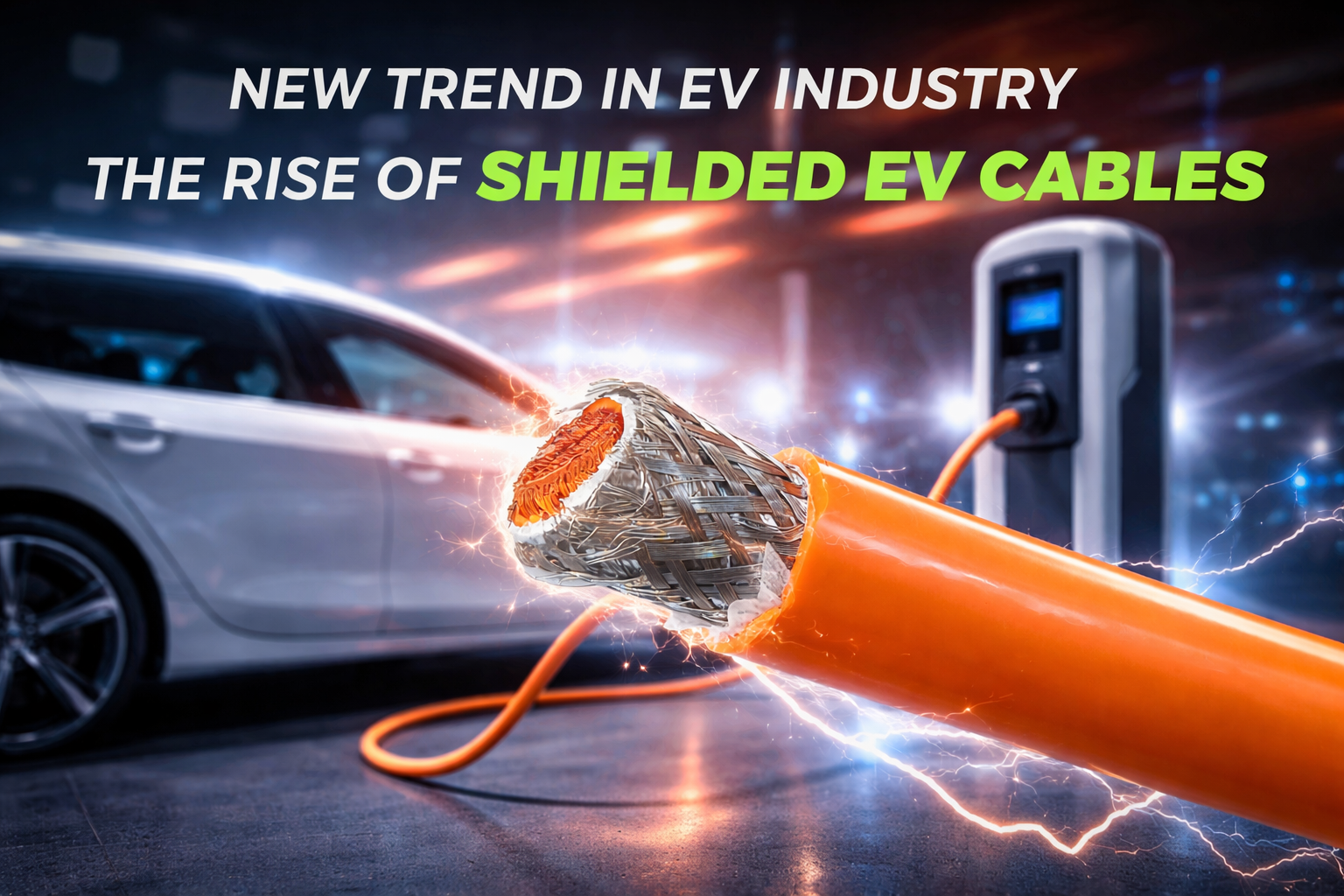
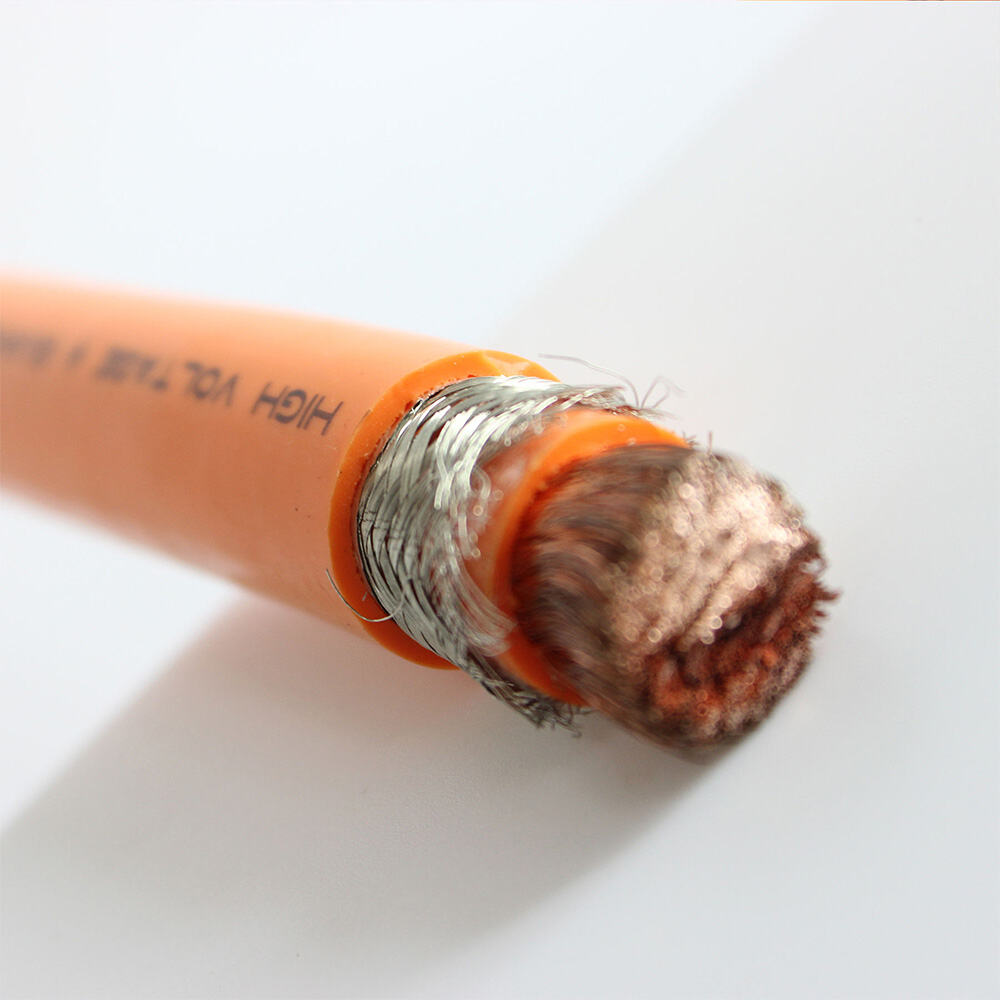
In systems where electromagnetic compatibility (EMC) is a concern — which includes virtually all modern EV powertrains and variable frequency drive installations — the high voltage cable must incorporate a dedicated shielding layer. This is typically a copper braid, foil wrap, or combination of both, applied over the insulated core before the outer jacket is extruded.
The shield serves two purposes: it contains electromagnetic emissions generated by the high-frequency switching of inverters and power electronics, and it provides protection against external electromagnetic interference that could corrupt signal integrity in adjacent control cables. For EV applications, EMC compliance to standards such as CISPR 25 and ISO 11452 is a design requirement, and the performance of the high voltage cable shield plays a direct role in meeting those standards.
When evaluating shielded high voltage cable options, examine the shield coverage percentage and the transfer impedance specification. Higher shield coverage (above 85%) significantly reduces radiated emissions. The grounding method of the shield at both ends of the cable run is equally important and must be addressed in the installation design.
Regulatory Standards and Certification Requirements
Key International Standards Governing High Voltage Cable Selection
Compliance with applicable standards is not optional when selecting a high voltage cable for a commercial or industrial application. The relevant standards govern insulation thickness, conductor resistance, short-circuit performance, flame retardancy, and test methods. Key standards include IEC 60502 for power cables up to 30 kV, IEC 60840 for voltages above 30 kV, and application-specific standards such as ISO 6722 and LV 216 for automotive high voltage cables used in EVs.
When procuring a high voltage cable for an EV or new energy vehicle application, confirming compliance with GB/T standards (in Chinese markets) or UL/CSA certifications (in North American markets) is essential for regulatory approval of the final vehicle or system. Cables without traceable certification introduce product liability risk and may fail type approval testing, resulting in costly redesigns and project delays.
Procurement engineers should request full test reports and certificate documentation from cable suppliers. Verify that the certificate covers the specific cable construction being purchased — not a different size or insulation variant — as certificates are construction-specific, not family-wide approvals.
Temperature Rating and Long-Term Reliability
The temperature rating of a high voltage cable defines the maximum conductor temperature at which the cable can operate continuously without degrading the insulation beyond acceptable limits. Cables are typically rated at 70°C, 90°C, or 105°C for continuous operation, with higher ratings corresponding to XLPE or specialized elastomeric insulations rather than standard PVC.
Choosing a high voltage cable with a temperature rating that matches or exceeds the worst-case operating condition is essential for long service life. In EV battery systems, cables in close proximity to the battery management system or power inverter may be exposed to elevated ambient temperatures. Selecting a cable with a 125°C or 150°C continuous rating provides a meaningful safety margin that translates directly into extended system reliability.
Long-term thermal aging tests, standardized under IEC 60216, provide data on how insulation materials degrade over time at elevated temperatures. Reviewing these test results for a candidate high voltage cable gives procurement teams a data-driven basis for comparing the expected service life of different cable options under the specific thermal conditions of their application.
FAQ
What is the difference between a medium voltage and a high voltage cable?
The distinction between medium voltage and high voltage cable is primarily defined by voltage class. Medium voltage cables typically cover the range from 1 kV to 36 kV, while high voltage cables are generally classified above 36 kV, up to and including extra-high voltage cables above 150 kV. However, in the context of EV and new energy vehicle systems, the term high voltage cable is commonly applied to cables operating in the 60 V to 1500 V DC range, which represents a specialized subset with its own construction and certification requirements distinct from grid-level cables.
How do I know if a high voltage cable is suitable for outdoor installation?
A high voltage cable intended for outdoor installation must be specified with UV-stabilized jacket materials, moisture-resistant insulation, and, where applicable, armor or conduit protection against physical damage. Look for cables that carry outdoor or direct burial ratings from the manufacturer, and verify that the jacket compound — typically UV-resistant PE, LSZH, or rubber — is confirmed in the product datasheet. Temperature cycling resistance is also critical for outdoor cables, as day-night thermal expansion can stress cable terminations over time.
Can a high voltage cable rated for AC also be used for DC applications?
Not necessarily. While some cable constructions are dual-rated for both AC and DC voltages, the design requirements differ. DC voltage stress distributes differently across insulation layers compared to AC, and certain insulation materials that perform well under AC stress can accumulate space charge under DC stress, which accelerates degradation. Always confirm that the high voltage cable you select carries an explicit DC voltage rating if your application involves direct current, particularly at voltages above 600 V DC where these effects become more pronounced.
What conductor material should I choose for a high voltage cable — copper or aluminum?
Copper conductors offer higher conductivity, greater flexibility, and better resistance to oxidation at termination points, making them the preferred choice for most EV, industrial, and high-performance applications. Aluminum conductors are lighter and less expensive, which makes them an attractive option for large-scale power distribution and overhead line applications where weight and material cost are primary drivers. For a high voltage cable in a compact or mobile application such as an electric vehicle powertrain, copper remains the standard due to its superior current density and the technical challenges of terminating aluminum in confined connector housings.
Table of Contents
- Understanding Voltage Class and System Requirements
- Insulation and Jacket Material Selection
- Flexibility, Bending Radius, and Installation Constraints
- Regulatory Standards and Certification Requirements
-
FAQ
- What is the difference between a medium voltage and a high voltage cable?
- How do I know if a high voltage cable is suitable for outdoor installation?
- Can a high voltage cable rated for AC also be used for DC applications?
- What conductor material should I choose for a high voltage cable — copper or aluminum?