EN
EN


When engineers and procurement specialists evaluate a high voltage cable for demanding applications, one of the first technical questions they encounter is why ordinary insulation simply cannot do the job. The insulation material surrounding the conductor is not a passive layer of protection — it is an engineered barrier that must withstand electric field intensities, thermal stress, chemical exposure, and mechanical abuse simultaneously. Understanding the reasons behind special insulation choices is essential for anyone involved in specifying, purchasing, or installing a high voltage cable in industrial, automotive, or energy infrastructure projects.
The selection of insulation materials for a high voltage cable is far from arbitrary. It is driven by the physics of dielectric breakdown, the demands of real-world operating environments, and increasingly, by regulatory and safety standards that hold manufacturers and system designers accountable for the long-term integrity of every installation. This article examines the core reasons why specialized insulation is non-negotiable, what those materials offer that conventional alternatives cannot, and how these engineering decisions translate into reliable performance for the end user.
The Physics Behind Insulation Failure in High Voltage Environments
Dielectric Stress and Breakdown Voltage
Every high voltage cable must manage the electric field that builds up between the energized conductor and surrounding grounded structures. At elevated voltages, this field exerts extreme mechanical and electrical stress on the insulating layer. If the insulation material cannot resist this stress, electrons begin to tunnel through the material in a process called partial discharge, which gradually erodes the insulation from within. Standard PVC or polyethylene compounds used in low-voltage cables do not possess the dielectric strength required to resist these forces at sustained high voltages.
Dielectric breakdown does not always happen instantly. In many cases, partial discharge events accumulate over thousands of operating hours, creating treeing structures — microscopic channels that propagate through the insulation until a full breakdown occurs. A purpose-engineered high voltage cable uses insulation materials with high dielectric strength measured in kilovolts per millimeter, which dramatically reduces the probability of partial discharge initiation under normal operating conditions. This is why the material science of the insulation layer receives as much engineering attention as the conductor itself.
Capacitance, Permittivity, and Energy Loss
The insulation layer in a high voltage cable also acts as a dielectric medium in a capacitive circuit. Materials with high relative permittivity store more electrical energy, which in turn increases capacitive charging current and dielectric losses. Over long cable runs, these losses translate directly into heat, reduced efficiency, and accelerated insulation aging. Special insulation materials such as cross-linked polyethylene, known as XLPE, are chosen in part because of their low dielectric constant and low dissipation factor, both of which minimize energy loss and heat generation within the cable.
For system operators managing large-scale cable networks, the difference in dielectric loss between a standard insulation and a high-performance alternative is not merely academic. It has measurable consequences for energy billing, cooling requirements, and equipment lifespan. A correctly specified high voltage cable with optimized insulation permittivity therefore delivers operational savings across the entire service life of the installation, making the material choice an economic decision as much as a technical one.
Why XLPE Has Become the Standard Insulation for High Voltage Cable Applications
The Cross-Linking Advantage
Cross-linked polyethylene, or XLPE, has become the dominant insulation material for high voltage cable construction in both power transmission and modern electric vehicle applications. The cross-linking process creates covalent bonds between polymer chains, transforming what would otherwise be a thermoplastic material into a thermoset compound. This structural change produces a dramatic improvement in thermal resistance — XLPE retains its mechanical and electrical properties at conductor temperatures that would cause conventional polyethylene to soften and deform.
The continuous operating temperature of XLPE-insulated high voltage cable typically reaches 90°C, with short-circuit temperatures tolerated up to 250°C depending on the specification. This thermal durability is critical in applications where cables are bundled together, routed through conduits with limited airflow, or exposed to direct sunlight and ambient heat. By maintaining dimensional stability and dielectric integrity at elevated temperatures, XLPE insulation prevents the kind of progressive softening and deformation that leads to conductor migration and insulation thinning in thermoplastic alternatives.
Chemical and Environmental Resistance of XLPE
A high voltage cable installed in industrial plants, underground conduits, or beneath the chassis of an electric vehicle faces exposure to oils, hydraulic fluids, solvents, moisture, and UV radiation. XLPE insulation offers a broad spectrum of chemical resistance that allows it to maintain its electrical properties even when surrounded by aggressive substances. Unlike EPR or certain silicone compounds, XLPE does not absorb moisture readily, which is a critical advantage because water treeing — the diffusion of moisture into micro-voids and its subsequent expansion under electric field stress — is one of the leading causes of long-term insulation degradation.
For outdoor or underground installations, the moisture resistance of XLPE insulation in a properly constructed high voltage cable can extend service life well beyond 30 years when combined with appropriate semiconductive screen layers and outer jacket protection. This longevity characteristic is a key driver in decisions made by utility engineers and EV powertrain designers who need a cable system that will not require costly replacement within the service life of the overall equipment or infrastructure it supports.
The Role of Semiconductive Screening Layers in High Voltage Cable Design
Field Grading and Stress Control
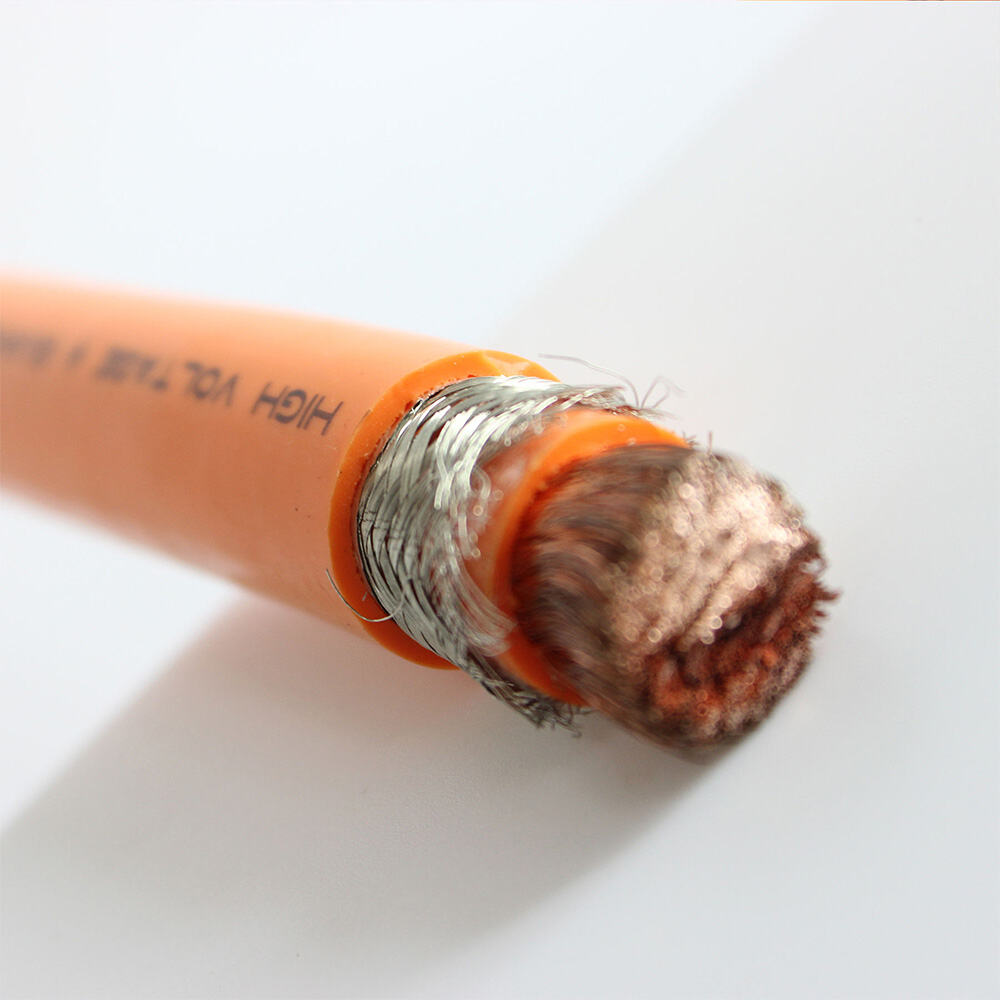
Beyond the primary insulation material, a well-engineered high voltage cable incorporates semiconductive screening layers both beneath the insulation (inner screen) and over it (outer screen). These layers serve a precise physical purpose: they create smooth, uniform electric field distribution around the circular cross-section of the conductor. Without them, any surface irregularity on the conductor or in the insulation interface would create a concentrated electric field stress point, dramatically increasing the likelihood of partial discharge initiation and eventual insulation failure.
The inner semiconductive screen bonds intimately with the XLPE insulation and ensures that no air gaps exist at the conductor-insulation interface. Air gaps would otherwise function as sites of intense partial discharge because air has a far lower dielectric strength than solid polymer materials. In a high-performance high voltage cable, the co-extrusion of the inner screen, insulation, and outer screen in a single manufacturing pass ensures this interfacial integrity without relying on adhesive bonding or mechanical compression, which can degrade over time with thermal cycling.
Insulation Screening and Metallic Shielding
The outer semiconductive screen in a high voltage cable is complemented by a metallic shielding layer — typically copper tape, copper wires, or an aluminum laminate — that provides a defined return path for capacitive charging current and fault current. This shielding also provides EMC protection, a feature increasingly valued in electric vehicle powertrains where power electronics generate broadband electromagnetic interference. The combination of semiconductive screening and metallic shielding around the primary insulation is what allows a modern high voltage cable to operate safely at 1500V DC and above without becoming a source of interference for sensitive control systems nearby.
Metallic shield design also influences how fault conditions are managed. A properly sized copper wire screen in a high voltage cable must be capable of carrying fault current long enough for protective devices to operate without thermal damage to the cable structure. This means the screening system is not just a passive EMC feature — it is an active participant in the electrical protection scheme of the system, reinforcing the argument that every layer of a high-voltage cable design serves a deliberate engineering purpose.
Regulatory Standards and Safety Requirements Driving Insulation Material Choices
International and Industry-Specific Standards
The choice of insulation materials for a high voltage cable is not left purely to the discretion of the designer. International standards including IEC 60502, IEC 62893, and various national equivalents establish minimum requirements for insulation material properties, test methods, and performance criteria. For electric vehicle applications specifically, standards such as ISO 6722, LV 216, and UL 758 define flame retardancy, flexibility, and thermal endurance benchmarks that insulation compounds must meet before the cable can be used in safety-critical drivetrain circuits.
Compliance with these standards is not merely a procurement checkbox — it is a fundamental reliability assurance. A high voltage cable that has been tested and certified to the appropriate standard provides documented evidence that its insulation has been exposed to accelerated aging tests, thermal shock cycling, bending fatigue, and dielectric withstand testing under controlled conditions. For system integrators and OEMs, this certification provides both legal protection and performance assurance, reducing the risk of field failures that carry significant financial and reputational consequences.
Flame Retardancy and Low Smoke Zero Halogen Requirements
In confined spaces such as tunnels, data centers, marine vessels, and the battery enclosures of electric vehicles, the behavior of a high voltage cable during a fire event is a primary safety consideration. Standard insulation materials that contain halogens such as chlorine or fluorine can generate toxic and corrosive combustion gases when burned, complicating evacuation and causing secondary damage to equipment. This has driven adoption of low smoke zero halogen (LSZH or LS0H) insulation compounds, which are specifically formulated to suppress flame propagation and minimize toxic gas generation.
LSZH insulation typically incorporates inorganic flame retardants such as aluminum trihydrate or magnesium hydroxide, which release water vapor when heated and absorb combustion energy in the process. For a high voltage cable installed in an EV battery pack or high-density industrial panel, this material choice can be the difference between a contained electrical fault and a catastrophic fire event. It illustrates how insulation material selection extends far beyond electrical performance into the domain of fire engineering and occupant safety.
Practical Implications for Selecting and Specifying High Voltage Cable Insulation
Matching Insulation to Operating Conditions
A common source of premature failure in electrical installations is the selection of a high voltage cable with insulation rated for conditions less severe than those actually encountered in service. Procurement teams must evaluate not just the nominal voltage of the application but also the peak conductor temperature, the thermal environment, the chemical exposure profile, and the mechanical stresses including bending, vibration, and crushing loads. Each of these factors influences which insulation compound and construction geometry is appropriate.
For example, a high voltage cable used in a static underground distribution run has fundamentally different insulation demands compared to one installed in the flexing cable chain of a robotic assembly line at the same voltage level. The former requires excellent moisture resistance and long-term dielectric stability; the latter requires superior flexibility, fatigue resistance, and the ability to maintain insulation integrity through millions of bending cycles. Recognizing these distinctions prevents costly over-specification in some cases and dangerous under-specification in others.
Long-Term Cost Analysis of Insulation Quality
When procurement decisions are driven primarily by initial unit price, there is a recurring temptation to select a high voltage cable with adequate but not optimal insulation for the application. This approach consistently underestimates the total cost of ownership. Insulation degradation in a high-voltage system rarely results in a simple, clean failure that can be quickly repaired. More commonly, it leads to intermittent partial discharge events that damage surrounding equipment, arc flash incidents that endanger personnel, and unplanned downtime that far exceeds the cost difference between a premium and a budget insulation system.
Industry experience in EV manufacturing and power infrastructure consistently demonstrates that specifying a high voltage cable with properly engineered insulation — whether XLPE, LSZH, EPR, or a composite formulation matched to the application — pays dividends in reduced maintenance intervals, higher system availability, and extended equipment lifespan. The insulation is not a commodity component. It is the primary determinant of whether the cable will perform safely and reliably throughout its intended service life.
FAQ
What makes XLPE a better insulation material for high voltage cable compared to standard PVC?
XLPE offers significantly higher dielectric strength, superior thermal resistance up to 90°C continuous and 250°C under short-circuit conditions, and much lower moisture absorption than standard PVC. These properties make it the preferred insulation for high voltage cable in both power transmission and electric vehicle applications, where conventional thermoplastics would soften, deform, or fail under sustained electrical and thermal stress.
Why does a high voltage cable need semiconductive screening layers in addition to insulation?
Semiconductive screening layers distribute the electric field uniformly around the conductor and insulation interface, eliminating concentrated field stress points where partial discharge could initiate. Without these layers, any surface irregularity or air gap at the conductor boundary would create localized high-stress zones that progressively erode the insulation. They are an essential part of the insulation system architecture in any properly designed high voltage cable.
How does insulation material affect the fire safety performance of a high voltage cable?
Insulation material directly determines how a high voltage cable behaves during a fire event. Halogen-containing compounds can generate toxic, corrosive smoke that endangers personnel and damages equipment. Low smoke zero halogen insulation materials suppress flame propagation and release water vapor rather than toxic gases when exposed to heat, making them essential in confined or occupied spaces such as tunnels, marine vessels, and electric vehicle battery enclosures.
How should operating environment conditions influence the insulation selection for a high voltage cable?
Operating conditions including maximum conductor temperature, chemical exposure, moisture levels, UV radiation, and mechanical stress such as bending or vibration must all be evaluated before selecting insulation for a high voltage cable. A cable rated adequately for nominal voltage but exposed to conditions beyond its insulation's thermal or chemical tolerance will fail prematurely, often causing collateral damage to connected equipment and unplanned system downtime that far exceeds the savings made during initial procurement.
Table of Contents
- The Physics Behind Insulation Failure in High Voltage Environments
- Why XLPE Has Become the Standard Insulation for High Voltage Cable Applications
- The Role of Semiconductive Screening Layers in High Voltage Cable Design
- Regulatory Standards and Safety Requirements Driving Insulation Material Choices
- Practical Implications for Selecting and Specifying High Voltage Cable Insulation
-
FAQ
- What makes XLPE a better insulation material for high voltage cable compared to standard PVC?
- Why does a high voltage cable need semiconductive screening layers in addition to insulation?
- How does insulation material affect the fire safety performance of a high voltage cable?
- How should operating environment conditions influence the insulation selection for a high voltage cable?